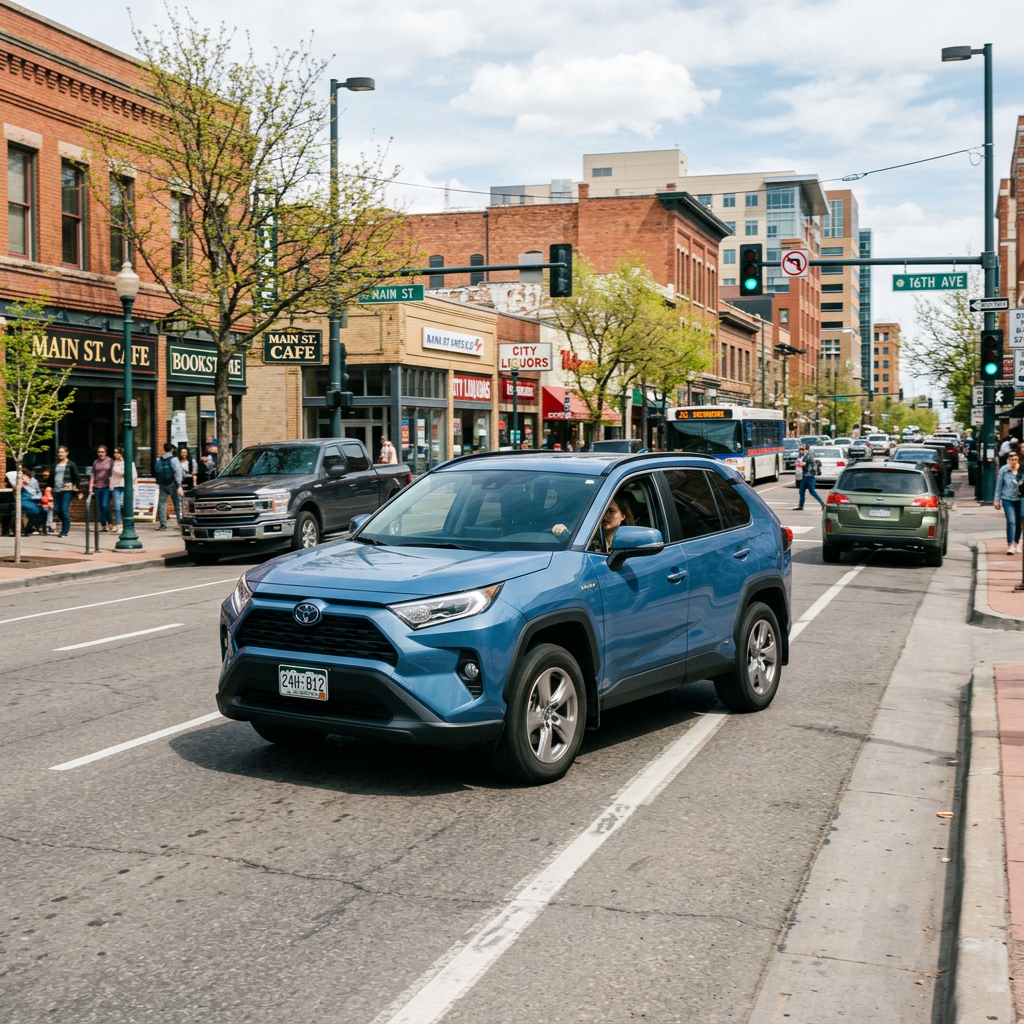
Electric vehicles have already changed the way Americans think about transportation. They’re quieter, cleaner, and increasingly more affordable to own than traditional gasoline-powered cars. But what if your EV could do something even more valuable than getting you from point A to point B?
Imagine a severe storm knocking out power across your neighborhood. The lights go dark. The refrigerator stops humming. Internet service disappears. Families scramble for flashlights while temperatures inside homes begin to rise or fall depending on the season.
Now imagine walking into your garage, plugging your electric vehicle into your home, and restoring power to essential appliances.
That future is no longer science fiction.
A growing number of electric cars can now serve as backup power sources during emergencies. Through vehicle-to-home (V2H) and bidirectional charging technology, certain EVs can send electricity back to a house when the power grid fails.
As extreme weather events become more common across the United States, this capability is becoming one of the most exciting developments in the EV industry.
In this guide, we’ll explore eight electric vehicles that can help power your home during emergencies, why this technology matters, and how it could reshape the future of energy independence.
Why Home Backup Power Is Becoming a Major EV Feature
For decades, homeowners relied on gasoline generators during power outages. While generators can be effective, they come with several drawbacks:
Fuel shortages during disasters
Loud operation
Maintenance requirements
Air pollution
Limited runtime
Electric vehicles offer a different solution.
Many modern EVs contain battery packs that are dramatically larger than residential backup batteries. Some EVs carry enough energy to power essential household systems for several days.
This has transformed how consumers view electric cars.
Instead of simply being vehicles, EVs are increasingly becoming mobile energy storage systems.
As utility companies, automakers, and homeowners embrace bidirectional charging, the line between transportation and energy management continues to blur.
Understanding Vehicle-to-Home (V2H) Technology
Before looking at specific models, it’s important to understand how this technology works.
Vehicle-to-home technology allows electricity stored inside an EV battery to flow back into a home’s electrical system.
When properly connected through compatible equipment, an EV can power:
Refrigerators
Freezers
Lighting
Internet routers
Medical equipment
Heating systems
Air conditioning (depending on battery size)
The amount of power available depends on the vehicle’s battery capacity and household energy usage.
For many families, even partial home backup can make a tremendous difference during extended outages.
- Ford F-150 Lightning
The EV That Changed Everything
When Ford introduced the F-150 Lightning, most headlines focused on performance, towing capability, and acceleration.
However, one feature quickly captured attention: Intelligent Backup Power.
The F-150 Lightning can provide electricity to a properly equipped home during grid outages.
Its massive battery pack essentially turns the truck into a giant energy reserve sitting in the driveway.
Many homeowners were surprised to learn that the truck could potentially keep essential home systems running for several days under the right conditions.
Why It Stands Out
Key advantages include:
Large battery capacity
Integrated backup power system
Strong support from Ford’s energy ecosystem
Popular pickup truck functionality
For Americans who already drive trucks, the Lightning offers a practical blend of utility and energy security. - Hyundai Ioniq 5
The EV That Made Bidirectional Power Mainstream
The Hyundai Ioniq 5 quickly became one of the most talked-about electric vehicles in America.
Its futuristic styling attracts attention, but its Vehicle-to-Load (V2L) functionality has become equally important.
Owners can power devices directly from the vehicle using dedicated adapters.
During emergencies, this can provide electricity for:
Small appliances
Portable heaters
Medical equipment
Communication devices
Emergency lighting
While it may not offer full-home backup in every configuration, its flexibility makes it one of the most practical EVs for emergency preparedness.
What Makes It Special
The Ioniq 5 demonstrates how EVs can serve as mobile power stations, not just transportation tools. - Kia EV9
A Family SUV With Energy Security Built In
Large families often worry about power outages more than anyone else.
Food storage, communication, heating, and cooling become immediate concerns when electricity disappears.
The Kia EV9 addresses these concerns with bidirectional charging capabilities and a substantial battery pack.
As one of the newest three-row electric SUVs on the market, the EV9 combines family-friendly practicality with advanced energy features.
Benefits During Emergencies
Spacious family vehicle
Large battery capacity
Bidirectional charging support
Suitable for extended outages
For households seeking both transportation and backup power, the EV9 offers an attractive package. - Nissan Leaf
The Unexpected Pioneer
Long before many competitors discussed vehicle-to-home technology, the Nissan Leaf was already exploring the concept.
The Leaf became one of the earliest mass-market EVs associated with V2H applications.
In some markets, homeowners have used Leaf batteries to support residential energy systems for years.
Although newer EVs often receive more attention, the Leaf deserves recognition for helping establish the foundation for today’s bidirectional charging movement.
Why It Still Matters
The Leaf proved that EV batteries could become valuable energy assets rather than simply vehicle components.
Its influence continues to shape the industry. - Chevrolet Silverado EV
A Work Truck That Doubles as a Power Station
The Chevrolet Silverado EV brings backup power capabilities into the highly competitive electric truck segment.
Like other electric pickups, it benefits from an enormous battery pack capable of storing significant amounts of energy.
For contractors, homeowners, and outdoor enthusiasts, this creates exciting possibilities.
Beyond emergency situations, the truck can provide electricity at job sites, campsites, and remote locations.
Key Strengths
Large battery reserve
Utility-focused design
Emergency home power potential
Strong appeal for truck buyers
As electric trucks become more common, energy resilience is emerging as a major selling point. - Hyundai Ioniq 9
Expanding the Future of Family Energy Solutions
The Hyundai Ioniq 9 represents the next phase of Hyundai’s EV strategy.
Built for larger households, it combines generous interior space with advanced electrical architecture.
Industry experts increasingly view vehicles like the Ioniq 9 as critical components of future smart-home ecosystems.
Instead of relying solely on utility providers, homeowners may soon manage energy across solar panels, home batteries, and EVs simultaneously.
Why Consumers Are Interested
The combination of family transportation and energy backup creates significant value in one purchase. - Kia EV6
Sporty Performance Meets Practical Preparedness
The Kia EV6 is often praised for its driving dynamics and modern design.
Yet one of its most underrated features is its ability to provide power through Vehicle-to-Load functionality.
During emergencies, owners can use the vehicle’s battery to keep critical devices operational.
This capability transforms the EV6 from a performance-oriented crossover into a valuable emergency preparedness tool.
Emergency Applications
Owners can potentially power:
Refrigerators
Phones
Laptops
Medical devices
Portable cooking equipment
For many households, maintaining access to these essentials can dramatically improve comfort during outages. - Genesis Electrified GV70
Luxury Meets Energy Independence
Luxury vehicles are increasingly embracing energy innovation.
The Genesis Electrified GV70 demonstrates that premium EVs can offer more than comfort and performance.
Its advanced electrical platform supports power-sharing capabilities that may prove invaluable during emergencies.
As luxury buyers become more interested in sustainability and resilience, features like bidirectional power are gaining importance.
Why Luxury Buyers Care
Modern consumers increasingly view energy security as a lifestyle benefit.
The ability to provide emergency power adds practical value beyond traditional luxury features.
How Much Power Can an EV Actually Provide?
One of the most common questions consumers ask is simple:
Can an electric car really power a house?
The answer depends on several factors.
A typical American household uses roughly 25 to 30 kilowatt-hours of electricity per day, though usage varies significantly by region and season.
Many modern EVs carry battery packs ranging from 60 kWh to over 130 kWh.
In practical terms, this means some electric vehicles contain enough stored energy to operate critical household systems for multiple days.
Of course, running an entire home continuously requires careful energy management.
Most homeowners prioritize essential devices rather than every appliance.
Even so, the potential is impressive.
Benefits of Using an EV as Home Backup Power
Greater Energy Independence
Power outages can create stress and uncertainty.
An EV provides a layer of self-sufficiency that many families find reassuring.
Reduced Generator Dependence
Traditional generators require fuel.
Electric vehicles eliminate the need to store gasoline for emergency use.
Environmental Advantages
Unlike gas generators, EVs produce no tailpipe emissions while supplying electricity.
Better Return on Investment
Consumers increasingly want products that serve multiple purposes.
An EV that functions as transportation and backup power delivers added value.
Challenges and Limitations
Despite the excitement surrounding vehicle-to-home technology, challenges remain.
Infrastructure Requirements
Many systems require specialized charging equipment and professional installation.
Vehicle Compatibility
Not every EV supports bidirectional charging.
Consumers should verify capabilities before purchasing.
Regulatory Differences
Utility regulations vary by state and local jurisdiction.
Installation requirements can differ significantly across the country.
Upfront Costs
Some V2H systems involve additional expenses beyond the vehicle itself.
However, costs are expected to decrease as adoption grows.
The Future of EV-Powered Homes
The future looks remarkably promising.
Industry experts envision neighborhoods where electric vehicles help stabilize local power grids.
Instead of being passive electricity consumers, homeowners may become active participants in energy management.
Imagine a future where:
Solar panels generate power during the day
Home batteries store excess energy
Electric vehicles provide backup support
Smart software optimizes energy use automatically
This vision is rapidly moving from concept to reality.
Major automakers continue investing heavily in bidirectional charging technology because they recognize its long-term potential.
For many consumers, backup power could become just as important as driving range.
What This Means for American Consumers
The rise of electric vehicles that can power homes represents a major shift in how people think about transportation.
For decades, vehicles were simply tools for travel.
Today, they are evolving into energy assets.
As climate challenges increase and grid reliability concerns grow, consumers are looking for practical ways to improve resilience.
Electric vehicles offer a compelling solution.
Whether it’s a family SUV, a luxury crossover, or a rugged electric truck, the ability to keep essential home systems running during an outage provides peace of mind that is difficult to quantify.
For many buyers, that peace of mind may soon become one of the most valuable features an EV can offer.
Final Thoughts
The electric vehicle revolution is no longer just about reducing emissions or saving money on fuel.
It’s about transforming the relationship between transportation, energy, and everyday life.
Vehicles like the Ford F-150 Lightning, Hyundai Ioniq 5, Kia EV9, Nissan Leaf, Chevrolet Silverado EV, Hyundai Ioniq 9, Kia EV6, and Genesis Electrified GV70 demonstrate how rapidly the industry is evolving.
These electric cars don’t simply move people.
They can help protect families during emergencies, provide energy when it’s needed most, and contribute to a more resilient future.
As EV technology continues to advance, the garage may become one of the most important energy centers in the modern American home.
1. Can an electric car really power an entire house?
Some electric vehicles can provide enough energy to run essential household systems for several days. Actual performance depends on battery size, energy usage, and installed bidirectional charging equipment.
2. What is vehicle-to-home (V2H) technology?
Vehicle-to-home technology allows electricity stored in an EV battery to flow back into a home’s electrical system, helping power appliances during outages.
3. Which electric vehicle is best for home backup power?
The Ford F-150 Lightning is often considered one of the strongest options because of its large battery capacity and integrated backup power capabilities, though several other EVs now offer similar functionality.