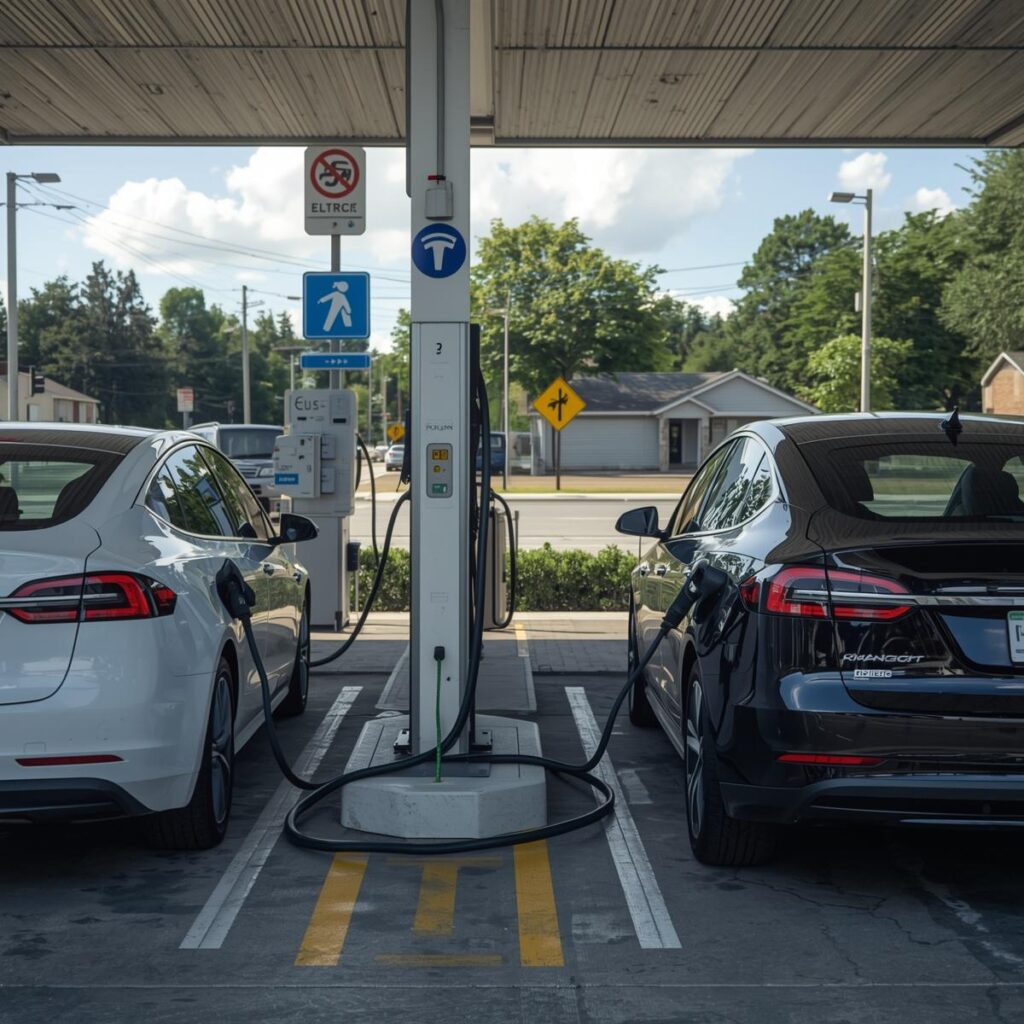
The Future of EV Charging Is Arriving Faster Than Many Drivers Expected
If you’ve ever pulled into an EV charging station only to find a line of cars waiting, a charger temporarily unavailable, or charging speeds that weren’t quite as fast as promised, you’re not alone.
As electric vehicle adoption accelerates across the United States, charging infrastructure has become one of the most important pieces of the transportation puzzle. Consumers love the idea of driving electric, but they also want confidence. They want to know they can travel long distances, recharge quickly, and get back on the road without stress.
That’s exactly why Electrify America is making one of its most significant moves yet.
The company is rolling out a new generation of EV charging stations that are larger, smarter, and supported by on-site battery energy storage systems. These next-generation charging hubs are designed to address some of the biggest challenges EV drivers face today while preparing for a future where millions more electric vehicles hit American roads.
The announcement isn’t just another charging network upgrade. It represents a major shift in how public EV infrastructure will operate in the coming years.
For EV owners, prospective buyers, and industry observers, this could be a glimpse into the future of charging in America.
Why EV Charging Infrastructure Matters More Than Ever
The electric vehicle market has evolved dramatically over the past few years.
What was once considered a niche segment is rapidly becoming mainstream. Automakers are investing billions of dollars into EV development. New electric SUVs, pickup trucks, luxury sedans, and affordable commuter vehicles continue entering the market at an unprecedented pace.
However, vehicle adoption is only one side of the equation.
Drivers also need reliable charging access.
Many potential buyers still cite charging concerns as one of the biggest reasons they hesitate to switch from gasoline-powered vehicles. While range anxiety has decreased thanks to larger batteries and improved efficiency, charging confidence remains a critical factor.
That’s where networks like Electrify America play a major role.
By expanding and modernizing public charging infrastructure, companies can help remove one of the final barriers preventing widespread EV adoption.
What Makes Electrify America’s Next-Gen Charging Stations Different?
The newest Electrify America charging stations aren’t simply larger versions of existing sites.
They’re designed from the ground up to handle the next era of electric transportation.
Several major improvements set them apart.
- Larger Charging Locations
One of the most noticeable upgrades is station size.
Many current charging locations were built during the earlier stages of EV adoption. At the time, planners couldn’t fully predict how quickly EV ownership would grow.
As a result, some stations now experience congestion during peak travel periods.
The next-generation sites aim to solve that issue by featuring significantly more charging stalls.
Benefits include:
Reduced wait times
Better accommodation for holiday travel
Easier access during busy hours
Improved reliability for road-trip planning
Enhanced convenience for rideshare and commercial drivers
As EV ownership continues rising, larger charging hubs become increasingly important.
- High-Power Charging Technology
Modern EVs are capable of charging faster than ever.
Many new vehicles can accept charging speeds exceeding 200 kW, while some next-generation models push even higher.
Electrify America’s upgraded locations are being built to support ultra-fast charging capabilities that align with future vehicle technologies.
For drivers, this means:
Shorter charging sessions
Faster road-trip stops
More convenient long-distance travel
Better utilization of charging infrastructure
The ultimate goal is simple: make charging feel less like a chore and more like a quick pit stop. - Battery-Backed Energy Storage
This may be the most important innovation of all.
Many of Electrify America’s new stations will include on-site battery energy storage systems.
At first glance, this might sound like a technical detail that only engineers care about.
In reality, it could significantly improve the charging experience.
Why Battery Storage MattersBattery-backed charging offers several advantages.Improved ReliabilityPower demand can fluctuate throughout the day.Battery storage helps smooth those fluctuations and maintain consistent charging performance.Drivers are less likely to experience reduced charging speeds during peak usage periods.Better Grid SupportAs EV adoption grows, utilities face increasing electricity demand.Battery systems can help reduce strain on local electrical infrastructure by storing energy during low-demand periods and delivering it during high-demand periods.Faster DeploymentIn some locations, upgrading grid infrastructure can take years.Battery storage can help charging providers deploy high-power charging stations more quickly while waiting for larger utility improvements.Renewable Energy IntegrationBattery storage pairs exceptionally well with renewable energy sources.As solar and wind generation expand, stored energy can help balance supply and demand more effectively.This creates a cleaner and more resilient charging ecosystem.
The EV Industry Is Entering a New Phase
For years, the EV conversation focused primarily on vehicle range.
Could electric cars travel far enough?
Could batteries last long enough?
Would drivers feel comfortable leaving gasoline behind?
Today, those questions are becoming less important.
Modern EVs routinely exceed 250, 300, and even 400 miles of range.
Now the focus is shifting toward charging convenience.
Consumers increasingly want:
Faster charging
More charging locations
Better reliability
Easier payment systems
Improved station amenities
Electrify America’s new charging hubs directly address these expectations.
The company appears to recognize that the future isn’t just about installing more chargers.
It’s about building better charging experiences.
How These Stations Could Change Road Trips
Road trips remain one of the most important tests of any charging network.
A commuter might charge primarily at home, but long-distance travel depends heavily on public infrastructure.
Anyone who has driven hundreds of miles in an EV understands how valuable dependable charging can be.
Imagine arriving at a charging station and finding:
More available stalls
Faster charging speeds
Less waiting
Consistent performance
Reliable power delivery
That experience reduces stress and increases confidence.
For many Americans considering their first EV purchase, knowing that charging networks continue improving could become a major deciding factor.
Supporting the Next Generation of Electric Vehicles
The automotive industry is evolving rapidly.
Upcoming EVs will feature:
Larger battery packs
Faster charging capabilities
Longer driving ranges
Advanced software integration
Increased energy demands
Charging infrastructure must evolve alongside them.
Building stations designed for yesterday’s vehicles would create bottlenecks tomorrow.
Electrify America’s approach reflects long-term planning.
Instead of merely responding to current demand, the company is preparing for future requirements.
This forward-thinking strategy could prove essential as EV sales continue climbing throughout the decade.
Benefits for Consumers
The average driver may never think about battery energy storage systems or grid management strategies.
What they care about is convenience.
Fortunately, many of these technological improvements translate directly into consumer benefits.
Key Consumer Advantages
Less Waiting
Larger stations mean more charging availability.
Faster Charging
High-power chargers reduce stop durations.
Greater Reliability
Battery-backed systems can help maintain consistent performance.
Better Travel Confidence
Expanded infrastructure supports long-distance driving.
Future-Proofed Experience
New stations are designed to accommodate next-generation EVs.
For consumers, that’s a compelling combination.
Challenges Still Facing EV Charging Networks
Despite exciting progress, challenges remain.
The EV charging industry is still maturing.
Several hurdles must be addressed.
Grid Expansion
Electricity demand will continue increasing as EV adoption grows.
Utilities and charging providers must coordinate infrastructure investments carefully.
Rural Coverage
Many charging stations remain concentrated around urban and suburban areas.
Expanding access into rural regions remains a priority.
Standardization
The industry continues transitioning toward broader charging compatibility and improved interoperability.
Drivers increasingly expect a seamless experience regardless of vehicle brand.
Maintenance and Uptime
Reliability remains essential.
Even the most advanced charging stations must maintain high operational standards.
Addressing these challenges will be critical to sustaining consumer confidence.
What This Means for America’s EV Future
The significance of Electrify America’s next-generation charging stations extends beyond the company itself.
These developments reflect broader industry trends.
We’re witnessing the evolution of EV infrastructure from basic functionality toward premium user experiences.
Future charging hubs may include:
Integrated battery storage
Solar power generation
Enhanced customer amenities
Smart energy management
Ultra-fast charging capabilities
Fleet charging support
In many ways, charging stations are becoming sophisticated energy hubs rather than simple refueling locations.
This transformation is likely to accelerate over the next decade.
Expert Outlook: The Rise of Energy-Intelligent Charging Networks
Industry experts increasingly view battery-backed charging as a critical component of future infrastructure.
Why?
Because the challenge isn’t simply delivering electricity.
It’s delivering electricity efficiently, reliably, and sustainably.
Battery storage provides flexibility.
It helps charging providers respond to demand spikes, optimize energy costs, and improve station performance.
As battery technology continues advancing and costs decline, energy storage will likely become more common across public charging networks.
The stations being deployed today could serve as templates for charging networks nationwide.
Practical Takeaways for EV Drivers
If you’re currently driving an EV—or considering purchasing one—there are several important lessons to take away from these developments.
- Public Charging Is Improving Rapidly
The charging experience of 2026 is significantly better than it was just a few years ago. - Infrastructure Investments Are Accelerating
Major charging providers continue investing heavily in expansion and modernization. - Long-Distance EV Travel Is Becoming Easier
Larger and faster charging hubs support road-trip convenience. - Battery Storage Is a Big Deal
Though largely invisible to consumers, battery-backed charging may become one of the most important technologies supporting EV growth. - The EV Ecosystem Is Maturing
Vehicles, charging networks, software platforms, and energy systems are evolving together.
That creates a stronger overall ownership experience.
Conclusion: A Bigger Step Forward Than It Might First Appear
At first glance, Electrify America’s next-generation charging stations might seem like a straightforward infrastructure upgrade.
But look closer, and the significance becomes clear.
These stations represent a shift toward smarter, more resilient, and future-ready charging networks.
By combining larger charging hubs, ultra-fast charging technology, and battery-backed energy storage, Electrify America is addressing some of the most important challenges facing EV drivers today.
Perhaps more importantly, the company is preparing for tomorrow.
As millions of additional electric vehicles join American roads over the coming years, charging infrastructure must evolve from adequate to exceptional.
The future of transportation won’t depend solely on better cars.
It will depend on better charging experiences.
And if Electrify America’s newest stations are any indication, that future is arriving faster than many expected.
faqs
1. What are battery-backed EV charging stations?
Battery-backed EV charging stations use on-site energy storage systems that store electricity and help deliver power during periods of high demand. This can improve charging reliability and reduce strain on the electrical grid.
2. Why is Electrify America building larger charging stations?
Larger stations help reduce congestion, shorten wait times, and accommodate growing EV adoption across the United States. They also prepare the network for future demand.
How do next-generation EV charging stations benefit drivers?
Drivers can experience faster charging speeds, improved reliability, reduced wait times, and greater confidence when traveling long distances in an electric vehicle.