Introduction
Recently we have seen that the gas price is rising day by day. you have also experience and thimg at gas station or pump for better cost saving ways.
With rising fuel prices, higher living costs, and a growing push toward cleaner energy, more Americans are asking the same question: Is switching to an electric car actually cheaper?
The answer isn’t just a simple yes or no. It depends on how and where you charge your electric vehicle (EV).
In 2026, EV charging costs in the U.S. have become more predictable—but also more varied. Charging at home can feel like a financial win, while public charging can sometimes surprise you with higher-than-expected costs.
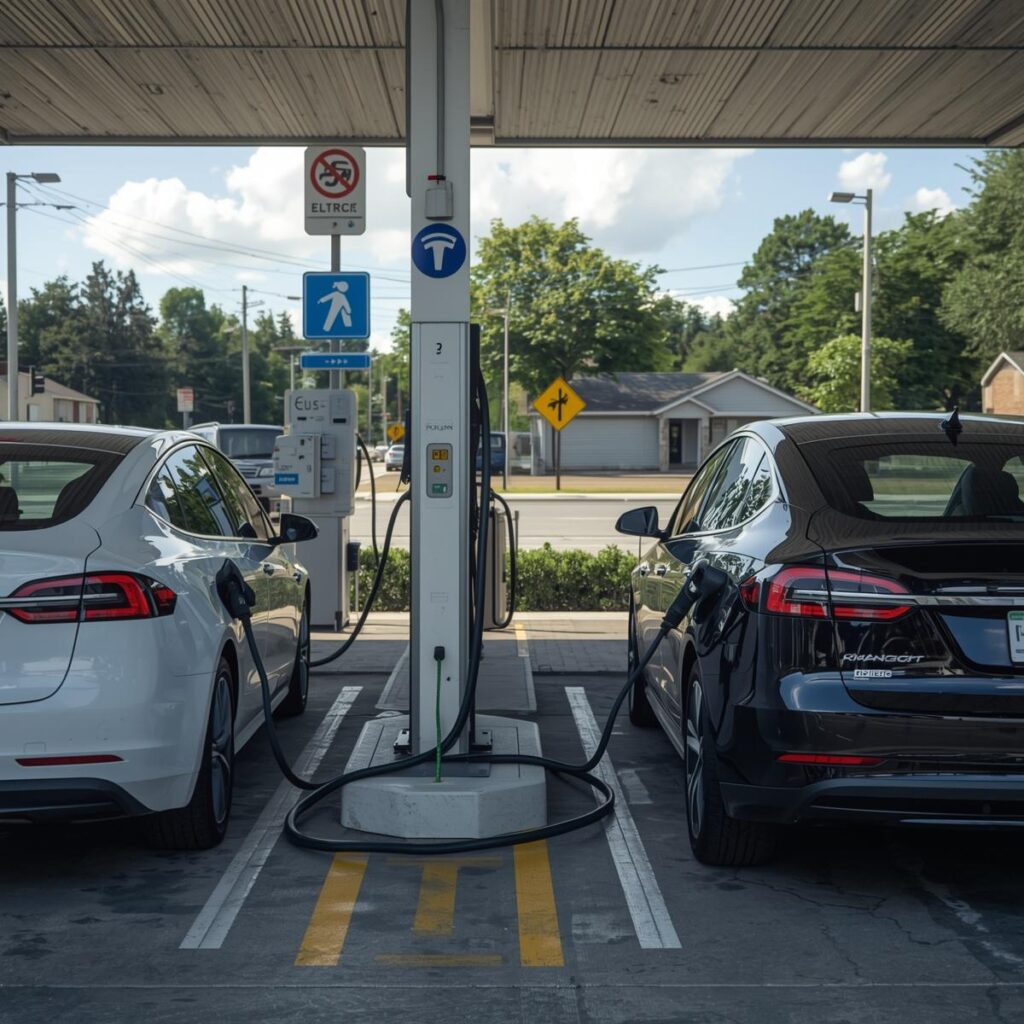
This guide breaks it all down in real numbers—so you can decide if driving electric is truly the smart financial move for your lifestyle.
Understanding the Basics: What Affects EV Charging Costs?
Before we dive into dollars, let’s quickly understand what actually determines how much you’ll pay to charge an EV:
- Electricity rates (per kWh)
- Battery size of your vehicle
- Charging method (home vs public)
- Time of day (peak vs off-peak rates)
- Location (state and utility provider)
In the U.S., electricity is measured in kilowatt-hours (kWh). Think of it like gallons of gas—but for electricity.
Average Electricity Cost in the U.S. (2026)
As of 2026, the average electricity rate in the U.S. is:
- $0.15 to $0.20 per kWh (residential average)
- Some states like California: $0.25+ per kWh
- Lower-cost states: $0.10–$0.13 per kWh
This range plays a huge role in how much you’ll spend charging your EV.
Home Charging Costs: The Cheapest and Smartest Option
Why Home Charging is the Best Choice
Charging your EV at home is where most drivers save serious money. It’s convenient, predictable, and often significantly cheaper than public stations.
Real Cost Example
Let’s break it down with a common EV:
- Battery size: 60 kWh
- Electricity rate: $0.16 per kWh
Full charge cost:
60 × $0.16 = $9.60
That’s it. Less than $10 for a full “tank.”
Cost Per Mile
Most EVs get around 3–4 miles per kWh.
So:
- Cost per mile = $0.04–$0.05
- Compare that to gas cars: $0.12–$0.20 per mile
That’s up to 70% savings.
Monthly Charging Cost at Home
Let’s say you drive:
- 1,000 miles/month
- EV efficiency: 3.5 miles per kWh
Electricity needed:
1,000 ÷ 3.5 = ~285 kWh
Monthly cost:
285 × $0.16 = $45.60
👉 That’s often less than half of what gas drivers pay.
Off-Peak Charging = Even More Savings
Many U.S. utility companies offer time-of-use (TOU) plans, where electricity is cheaper at night.
- Peak rate: $0.20/kWh
- Off-peak rate: $0.10/kWh
If you charge overnight:
- Full charge cost drops to $6 or less
This is one of the biggest “hidden savings” EV owners enjoy.
Public Charging Costs: Convenience Comes at a Price
Home charging is ideal—but not always possible. That’s where public charging comes in.
Types of Public Chargers
Level 2 Chargers (Slower, Cheaper)
- Found in malls, offices, parking garages
- Cost: $0.20–$0.35 per kWh
DC Fast Chargers (Fast, Expensive)
- Found on highways and major routes
- Cost: $0.35–$0.60 per kWh
Real Cost Example (Public Charging)
Using the same 60 kWh battery:
Level 2 Charging
- 60 × $0.25 = $15
DC Fast Charging
- 60 × $0.50 = $30
That’s 3x more expensive than home charging.
Cost Per Mile (Public Charging)
- Level 2: $0.07–$0.09 per mile
- Fast charging: $0.12–$0.18 per mile
At this point, the cost can get close to gas-powered cars.
Free Charging: The Hidden Bonus Most People Ignore
Yes, free charging still exists in 2026.
You can often find it at:
- Workplaces
- Hotels
- Shopping centers
- Some apartment complexes
Even charging for free just once or twice a week can significantly reduce your monthly costs.
Comparing EV Charging vs Gas Costs (Real U.S. Numbers)
Let’s compare side by side:
Gas Car (25 MPG)
- Gas price: $3.80/gallon
- Cost per mile: ~$0.15
Monthly (1,000 miles):
👉 $150
EV (Home Charging)
- Cost per mile: ~$0.04
- Monthly:
👉 $40–$50
EV (Public Fast Charging Only)
- Cost per mile: ~$0.14
- Monthly:
👉 $130–$150
Key Takeaway
- Home charging = massive savings
- Public charging only = similar to gas
Installation Cost of Home Charging (One-Time Investment)
To charge efficiently at home, most people install a Level 2 charger.
Typical Costs in the U.S.:
- Charger unit: $400–$800
- Installation: $500–$2,000
Total:
👉 $900–$2,800
But Here’s the Smart Part
Many states offer:
- Tax credits
- Rebates
- Utility incentives
Which can reduce your cost by 30–50%.
State-by-State Cost Differences (Why Location Matters)
Charging costs vary widely across the U.S.
Higher-Cost States:
- California
- Hawaii
- New York
Home charging cost:
👉 $0.20–$0.30 per kWh
Lower-Cost States:
- Texas
- Florida
- Washington
Home charging cost:
👉 $0.10–$0.14 per kWh
Hidden Costs Most People Don’t Talk About
1. Charging Network Fees
Some networks charge:
- Membership fees
- Session fees ($1–$5 per use)
2. Idle Fees
Leave your car plugged in too long?
You could pay:
👉 $0.40–$1 per minute
3. Battery Efficiency Loss
Cold weather or fast charging can reduce efficiency slightly—meaning higher costs over time.
Real-Life Example: Monthly EV Cost in 2026
Let’s say:
- You drive 1,200 miles/month
- 80% home charging, 20% public
Breakdown:
Home charging:
- 275 kWh × $0.16 = $44
Public charging:
- 70 kWh × $0.40 = $28
Total monthly:
👉 $72
Still much cheaper than gas.
Is Charging an EV Worth It in 2026?
If you’re thinking purely about money, here’s the honest answer:
YES — If You Charge at Home you feel awsome
You’ll save:
- Hundreds per year
- Thousands over the lifetime of the car
MAYBE — If You Rely on Public Charging
Costs become:
- Less predictable
- Sometimes equal to gas
BEST CASE SCENARIO
- Home charging + occasional free charging
👉 Maximum savings + convenience
Smart Tips to Save Even More on EV Charging
- Charge during off-peak hours
- Install a home charger
- Use apps to find cheaper stations
- Take advantage of free charging spots
- Avoid overusing fast chargers
Small habits = big savings over time.
Final thought: The Real Cost of Charging an EV in the U.S.
transfering to an electric vehicle isn’t just about technology—it’s about making a smarter financial decision for you as well as for your family .
In 2026, the numbers are clear:
- Charging at home is cheap, predictable, and efficient
- Public charging is convenient but more expensive
- Your lifestyle determines your total savings
If you have access to home charging, an EV isn’t just a good choice—it’s a powerful money-saving tool that can reshape your monthly budget.
And in a time when everything feels more expensive, that kind of control over your spending? That’s not just smart—it’s freedom.
so its better to switch to electric vehicle and feel free of cost.
Is it cheaper to charge an EV than buying gas in the U.S.?
Yes, in most cases. Charging at home can cost 50–70% less than fueling a gas car, making EVs a smart long-term financial choice.
How much does it cost to fully charge an electric car in 2026?
Home charging: $8–$15
Public charging: $15–$30
The exact cost depends on electricity rates and battery size.
Can I rely only on public charging stations?
Yes, but it may reduce your savings. Public fast charging can cost nearly the same as gas, so combining it with home charging is the best strategy.
follow for more updates…..