It’s 10:00 PM on a Sunday. You just got back from a weekend road trip to see family. Your gas-powered SUV is sitting on “E,” and you know tomorrow morning’s commute is going to cost you another $65 at the pump. You sigh, planning your detour to the station.
Now, imagine a different reality. You pull into your garage, plug a small handle into your car, and walk inside. No detour. No smell of gasoline. No shivering in the cold while the tank fills.
If you are one of the millions of Americans who finally bought an EV in 2025—or you’re planning to make the leap this year—you have arrived at the most important financial decision you’ll make besides the car itself: Which Level 2 home charger should you install?
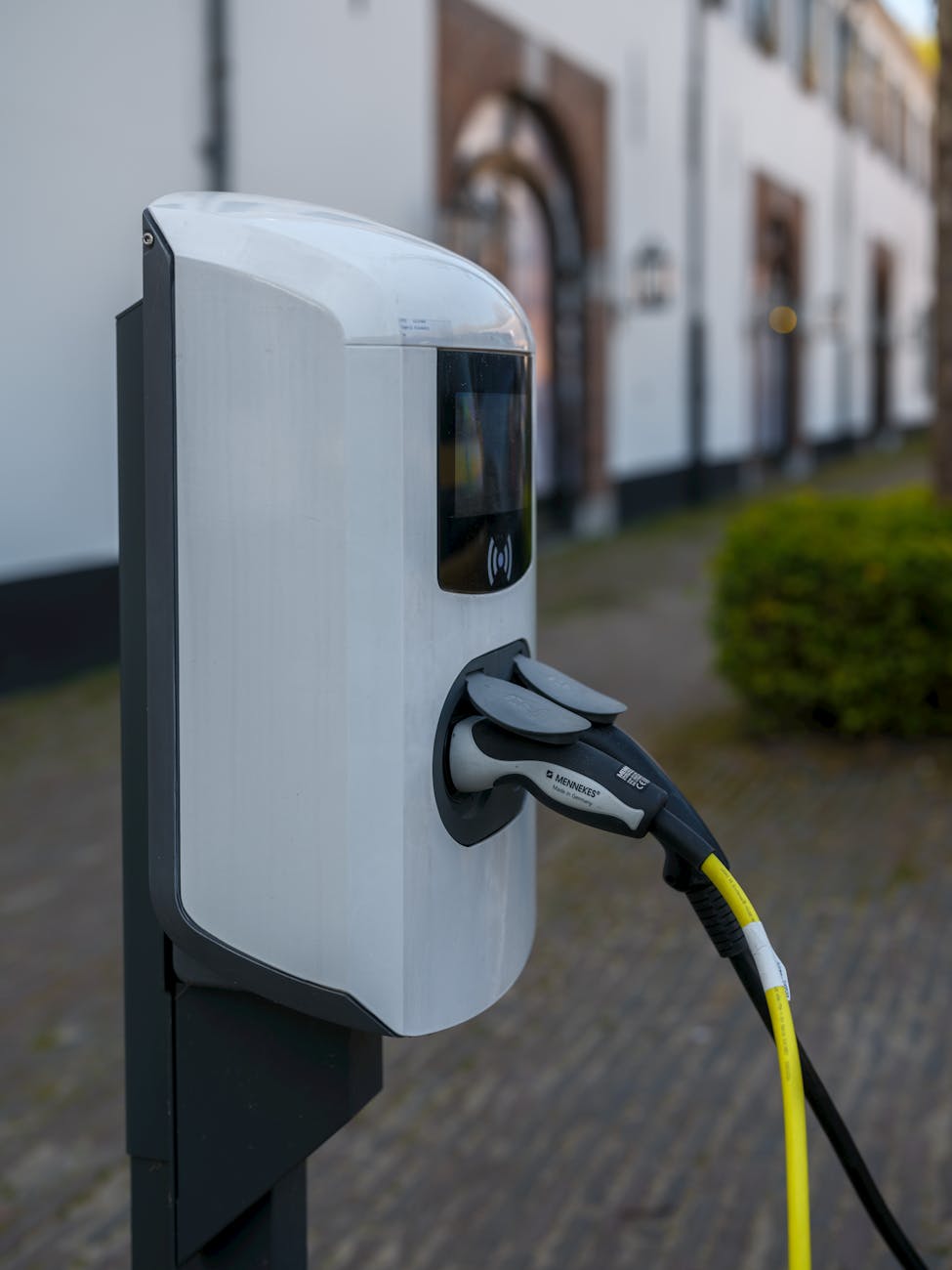
Here is the truth most people don’t realize: The charger that comes in your trunk is a toy. It adds about 3 miles of range per hour. You wouldn’t fill a swimming pool with a garden hose. Why would you charge a $50,000 battery that way?
Let’s break down the best Level 2 chargers for 2026, how they save your sanity, and which one actually pays for itself.
Why 2026 is the “Tipping Point” for Home Charging
The landscape changed last year. In 2025, the federal NEVI program finally kicked into high gear, but more importantly, utility companies in Texas, California, and New York started offering time-of-use rates that make midnight charging cheaper than a cup of coffee.
For a U.S. driver aged 25 to 45, convenience isn’t just a luxury—it’s a currency. You are busy. You work hybrid schedules. You have kids with soccer practice. Waiting 45 minutes at a public fast charger is a waste of your life.
A Level 2 charger turns your home into a gas station. You wake up every single morning with a “full tank.” That feeling? That is financial freedom and time freedom combined.
Level 1 vs. Level 2: The Brutal Math
Before we compare brands, let’s look at the hard numbers.
- Level 1 (Standard Wall Outlet): Delivers 1.3 kW – 2.4 kW. Gains ~3-5 miles per hour. A full charge for a Ford F-150 Lightning takes 4 days.
- Level 2 (240V Outlet): Delivers 7 kW – 19 kW. Gains ~25-45 miles per hour. A full charge takes 4-8 hours (while you sleep).
What this means for you: If you drive more than 40 miles a day (which most Americans do), you need Level 2. Don’t let anyone tell you otherwise.
The Top 5 Best Home EV Chargers in the U.S. for 2026
We looked at durability (hot summers, cold winters), smart features, installation costs, and reliability. These are the units that won’t catch fire and won’t leave you stranded.
1. ChargePoint Home Flex (Series 2)
Best for: Tech lovers and utility bill optimizers.
ChargePoint has been the “Apple” of EV charging for years. The 2026 model finally fixed the flimsy cable issues of the 2023 version.
- Power: Up to 50 Amps (12 kW)
- Cord Length: 23 feet
- The Killer Feature: The app connects directly to your local utility. In states like California (PG&E) or Illinois (ComEd), the charger automatically waits until electricity drops to $0.08/kWh to start juicing up.
- Real talk: If you hate programming timers, this does it for you.
2. Grizzl-E Classic (2nd Gen)
Best for: Northern winters and rugged reliability.
There is a reason Canadians dominate this market. The Grizzl-E is ugly. It looks like a lunchbox from the 1990s. But it is sealed against rain, snow, and salt corrosion.
- Power: 40 Amps (9.6 kW)
- Cord Length: 24 feet (super flexible in cold weather)
- The Killer Feature: No app. No Wi-Fi. Just plug and go. For the driver who says, “I don’t need my charger to tweet,” this is your winner.
- Cost: Usually $100–$200 less than smart chargers.
3. Tesla Universal Wall Connector
Best for: Mixed households (Tesla + Non-Tesla).
In 2026, this is the smartest buy for future-proofing. It has a built-in adapter (the “Magic Dock”) that works natively with NACS (Tesla’s plug) and J1772 (everyone else).
- Power: 48 Amps (11.5 kW)
- The Killer Feature: Power sharing. If you have two EVs in the driveway, two of these units can share one circuit breaker without blowing your panel.
- Aesthetic: Sleek, glass front. It looks good on a garage wall.
4. Emporia EV Charger (V2)
Best for: Budget nerds who want data.
Emporia took the market by storm in 2024/2025. The V2 improves the heat dissipation.
- Power: 48 Amps (11.5 kW)
- The Killer Feature: It integrates with the Emporia home energy monitor. You can see exactly what your car, your AC, and your dryer are costing you in real time.
- Verdict: Best value for money under $400.
5. Wallbox Pulsar Plus (Ultra)
Best for: Small garages and solar owners.
This unit is tiny—about the size of a hardcover book.
- Power: 40 Amps (9.6 kW)
- The Killer Feature: Solar charging. If you have rooftop solar panels, the Wallbox can charge your EV only with excess sun, not from the grid at night.
- Design: The cord management is the best in class.
The Cost Breakdown: Out-of-Pocket vs. Long-Term Savings
Let’s talk about the elephant in the room. Money.
- The Charger: $300 – $700 (One-time cost)
- Installation (Electrician): $500 – $1,500 (Depends if your panel needs an upgrade)
Wait, don’t close the tab. Here is why you do this anyway.
The Math on a Tesla Model 3 (Driving 15,000 miles/year):
- Gas Car (30 MPG at $3.80/gal): $1,900/year
- EV charging at home (national avg $0.16/kWh): $550/year
- Annual Savings: $1,350
Recovery time: Your charger and install pay for themselves in 12 to 18 months. After that, you are essentially driving for free compared to gas.
Pros & Cons of Level 2 Home Charging (2026 Reality Check)
Pros
- Wake up full: Never visit a gas station again (except for coffee).
- Increase home value: Buyers in 2026 expect a 240V plug in the garage.
- Grid stability: Smart chargers actually help the Texas/California grid by pausing during peak demand (you get paid for this via some utility programs).
Cons
- Rental issues: If you rent your home, installing a hardwired unit is a negotiation headache.
- Old panels: Homes built before 1980 might need a $2,000 panel upgrade to handle 50 amps.
- “Range Anxiety” shifts to “Broken Charger Anxiety”: If your unit dies, you are stuck on Level 1 for a week.
How to Choose Based on YOUR Lifestyle (Not the Hype)
Scenario A: You own a home in Phoenix or Houston.
- Get: Grizzl-E. The plastic chargers melt in the sun. The Grizzl-E is metal.
Scenario B: You have ADHD and always forget to plug in.
- Get: ChargePoint Home Flex. The app will nag you (lovingly) at 9 PM if your car isn’t plugged in.
Scenario C: You drive a Chevy Bolt and a Ford F-150 Lightning.
- Get: Tesla Universal Connector. It speaks both languages (NACS & J1772) without dongles that get lost.
Final Verdict: Is It Worth It in 2026?
Yes. Unequivocally.
The anxiety you feel about gas prices isn’t going away. OPEC is still volatile. Hurricanes still shut down pipelines. But your garage? That is a fortress of energy independence.
If you want the safest bet for the next 5 years: Buy the Tesla Universal Wall Connector. Even if you hate Elon Musk, the hardware is superior. It has the longest cable, the highest amp rating (48A), and the NACS plug is now the official US standard (SAE J3400). Buying a J1772-only charger today is like buying an iPhone with a 30-pin connector in 2012.
If you want the budget king: Buy the Emporia.
Do I really need a Level 2 charger, or can I survive with a regular wall outlet?
If you drive less than 30 miles per day and the car sits in your garage for 14+ hours, Level 1 might work. But for 90% of U.S. drivers, Level 1 is frustratingly slow. Once winter hits and the battery uses energy to keep itself warm, Level 1 essentially just maintains the battery; it doesn’t charge it. Spend the money on Level 2.
Will charging my EV at home destroy my electric bill?
No, but it will change when you use power. The average EV adds about $40–$60 to a monthly electric bill. However, if you use a smart charger to schedule charging for 2:00 AM, you might actually lower your overall bill if you are on a “Time-of-Use” plan. Many utilities offer special EV rates as low as $0.05/kWh overnight. That is the equivalent of paying $0.50 per gallon of gas.
Should I hardwire my EV charger or use a NEMA 14-50 plug?
Hardwire it. A plug adds a point of failure (the outlet can melt if it’s a cheap $10 Leviton brand). Hardwiring is safer, allows for higher amperage (48A vs 40A), and usually saves you the cost of a GFCI breaker (which is required for outlets but not hardwiring). Tell your electrician: “Hardwire it, please.”